Lech Lecha: The Engine of Curiosity
When Torah Meets Toolbox

Every so often the Torah slips in a line that rewires the human operating system.
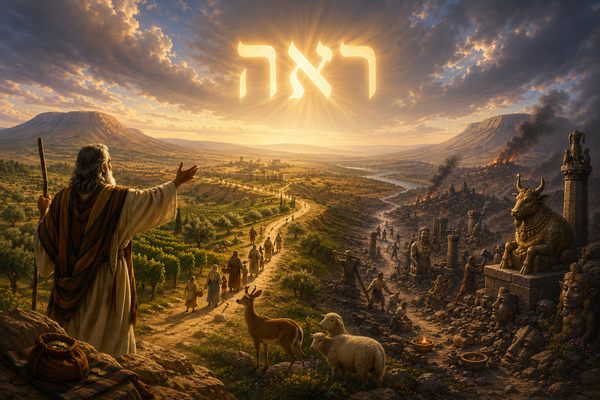
“Lech lecha — Go for yourself, from your land, your birthplace, your father’s house…”
It’s not just geography. It’s psychology.
Avraham doesn’t get coordinates; he gets curiosity.
🗺 The World’s First Exploration Engine
Rashi notes that Hashem doesn’t name the destination, only promises, “to the land that I will show you.” Ramban adds that this concealment is itself the test — the leap into unknown knowns.
Midrash Rabbah (39:1) paints the moment of awakening: a traveler sees a palace aflame and asks, “Is there no owner?” The Owner replies, “I am the owner.” Avraham’s discovery of G-d begins with a question, not an answer. Curiosity, not certainty, ignites faith.
This is the real lech lecha — not “go away,” but “go toward.” Toward the questions, the experiments, the edges of understanding.
When Noach built the first kli — the tool that eased labor — Avraham built the first journey, the mapless prototype for discovery itself.
🔍 Avraham’s Ten Trials as Gameplay
Pirkei Avot 5:3 tells us Avraham faced ten trials and withstood them all. Each one is a curiosity checkpoint.
- Leave home → Can faith survive uncertainty?
- Famine → Can adaptability coexist with integrity?
- Rescue Lot → How do we act ethically with partial information?
- Brit Milah → What happens when faith rewrites identity?
- Akeidah → What if the test is the not-knowing itself?
Curiosity is what keeps him moving between them. Blind obedience would have stopped at the first sign of trouble.
💾 Curiosity in Code
If Noach’s plow was the first patent, Avraham’s curiosity is the first open-source protocol.
Every generation since has tried to automate that instinct — to code curiosity into systems. AI is the newest attempt.
A good model doesn’t just recall; it explores latent space. It guesses, tests, refines. The better it’s trained, the more Avrahamic it becomes: willing to venture into “the land that I will show you” — data it’s never seen — yet still guided by alignment.
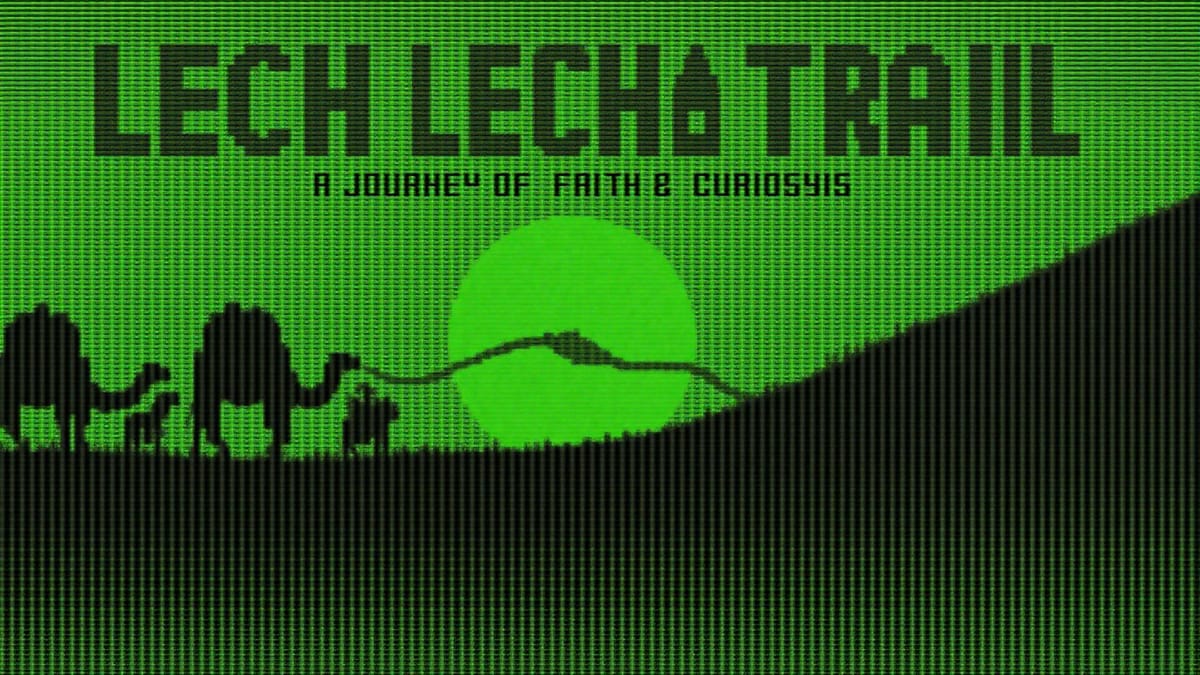
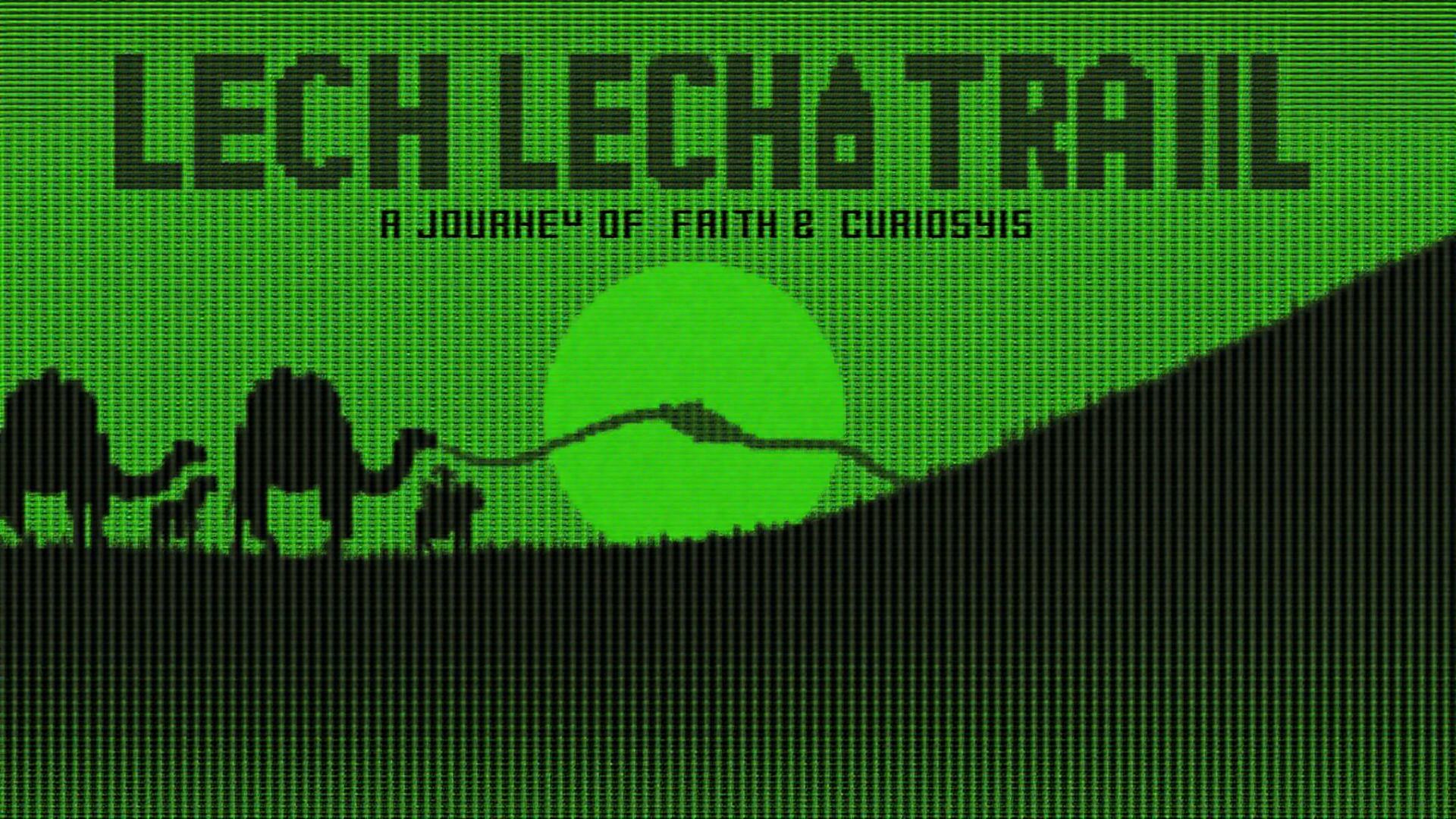
That’s why we built Lech Lecha Trail, our Oregon-Trail-style Torah game. Not to gamify the parasha, but to embody its engine. The player journeys with Avraham, making choices, facing trials, discovering faith through curiosity. It’s not about right answers; it’s about right questions.
Play Now: https://lech.nivra.org
🧠 The Curiosity-Faith Loop
Rav Kook describes hishtokekut — the yearning to know — as the root of spiritual creativity and growth.
Rav Soloveitchik portrays faith as an act of creative partnership — human initiative inside divine command.
Both see curiosity not as doubt but as devotion — the mind’s way of saying Hineni.
The Akeidah seals the lesson.
Avraham “saw the place from afar.” Rashi says he saw a cloud hovering over the mountain. The attendants saw nothing. Only the curious eye perceives the divine signal.
At the end, God tells him, “Now I know that you fear Me.”
But maybe it also means: Now you’ve learned how to look.
🪜 The Curiosity Test — Does Our Exploration Serve Lech Lecha?
Criterion Avraham’s Journey Modern AI Invites exploration ✅ Left without coordinates ✅ Models explore unknown data Preserves agency ✅ Chose each response freely ⚠ Depends on prompts & oversight Builds understanding ✅ Questions led to revelation ⚠ Depends on transparency Promotes partnership ✅ Co-creation with the Divine 🧩 Only if aligned with human values
Like Noach’s Kli Test, every new system must pass its Lech Lecha Test: does it send us outward into wonder, or inward into self-reference?
🌄 Reflections — Faith in the Age of Algorithms
AI done well isn’t automation; it’s accompaniment. It doesn’t replace our curiosity — it multiplies it.
But only if we keep walking.
In an era of predictive feeds and frictionless answers, curiosity itself is a moral act. The willingness to not know yet might be our last frontier of freedom.
That’s Avraham’s legacy: the courage to step out of the known, guided by faith, calibrated by curiosity.
Shabbat-table question:
When Hashem says Lech lecha, what territory in your own life might He be pointing toward?
And when you prompt an AI, are you just commanding it — or inviting it to explore with you?
Shabbat Shalom,
Dave