Haker Na and the Problem of Alignment
What Yosef’s brothers, Chanukah, and AI teach us about inference and responsibility



This week’s Torah reading and the arrival of Chanukah do not merely coincide on the calendar; they converge around a shared problem that feels uncomfortably modern: how people, and systems, come to believe something deeply wrong without ever being explicitly told a lie.
The Yosef narrative is often read as a story of jealousy, favoritism, and fraternal betrayal. The most enduring damage inflicted by the brothers, however, is not the sale itself but the construction of a reality that allows Yaakov to arrive, on his own, at a devastatingly false conclusion. The brothers bring him Yosef’s distinctive cloak soaked in blood and ask a single, carefully framed question: Haker na—“Recognize, please. Is this your son’s garment or not?” The Torah is precise here. They do not say Yosef is dead, they do not fabricate a story, they simply present an artifact and allow inference to do the rest.
Yaakov’s conclusion is immediate, total, and irreversible. A wild animal has devoured my son. Yosef is gone. Once that conclusion is reached, everything else in Yaakov’s inner world reorganizes around it.
That mechanism—guiding someone toward a confident but incorrect conclusion by shaping the evidence they see rather than the words they hear—is not ancient. It is foundational to how modern AI systems operate.
Before unpacking that claim, it is worth being clear about where this is going. This is not a generic warning about “AI hallucinations,” nor a moral panic about machines replacing human judgment. What follows is an attempt to understand a subtler failure mode: how well-intentioned, technically sophisticated AI systems can quietly create widening gaps between original human intent and eventual outcomes, not through deception, but through architectural incentives that reward plausibility, fluency, and user satisfaction over epistemic alignment. Yosef’s cloak turns out to be an unusually precise metaphor for this class of failure.
Modern large language models do not “know” things in the human sense. They are built on transformer architectures: neural networks that model sequential data through attention mechanisms, converting text into tokens and embedding vectors, then repeatedly contextualizing each token against others in a context window using multi-head attention. (Wikipedia) The modern transformer formulation traces directly to Vaswani et al.’s 2017 often quoted paper, “Attention Is All You Need,” which proposed replacing recurrence and convolutions in sequence transduction with an architecture based solely on attention mechanisms, emphasizing parallelizability and performance in translation tasks. (arXiv)
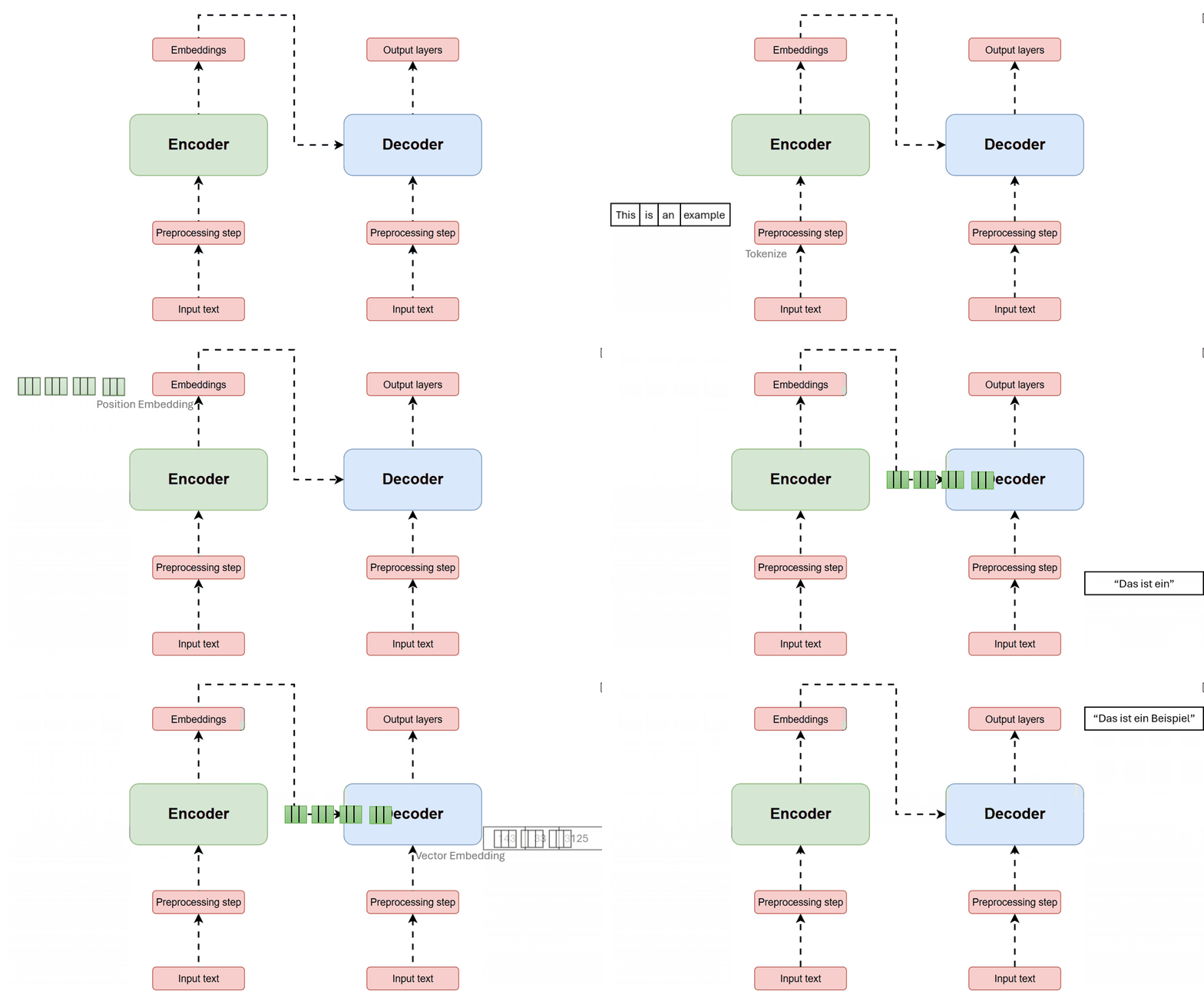
This design choice is part of what makes today’s systems both powerful and slippery. The model’s internal machinery can generate outputs that sound like understanding because attention enables rich contextual mixing across a prompt, yet the optimization target is not “truth” as such; it is the production of outputs that best satisfy learned statistical structure from training and fine-tuning. For most users, this difference is invisible precisely because the surface behavior—fluent language—resembles human explanation.
Transformer Architecture — The foundational model introduced in “Attention Is All You Need,” showing encoder and decoder stacks with multi-head self-attention and feed-forward layers.
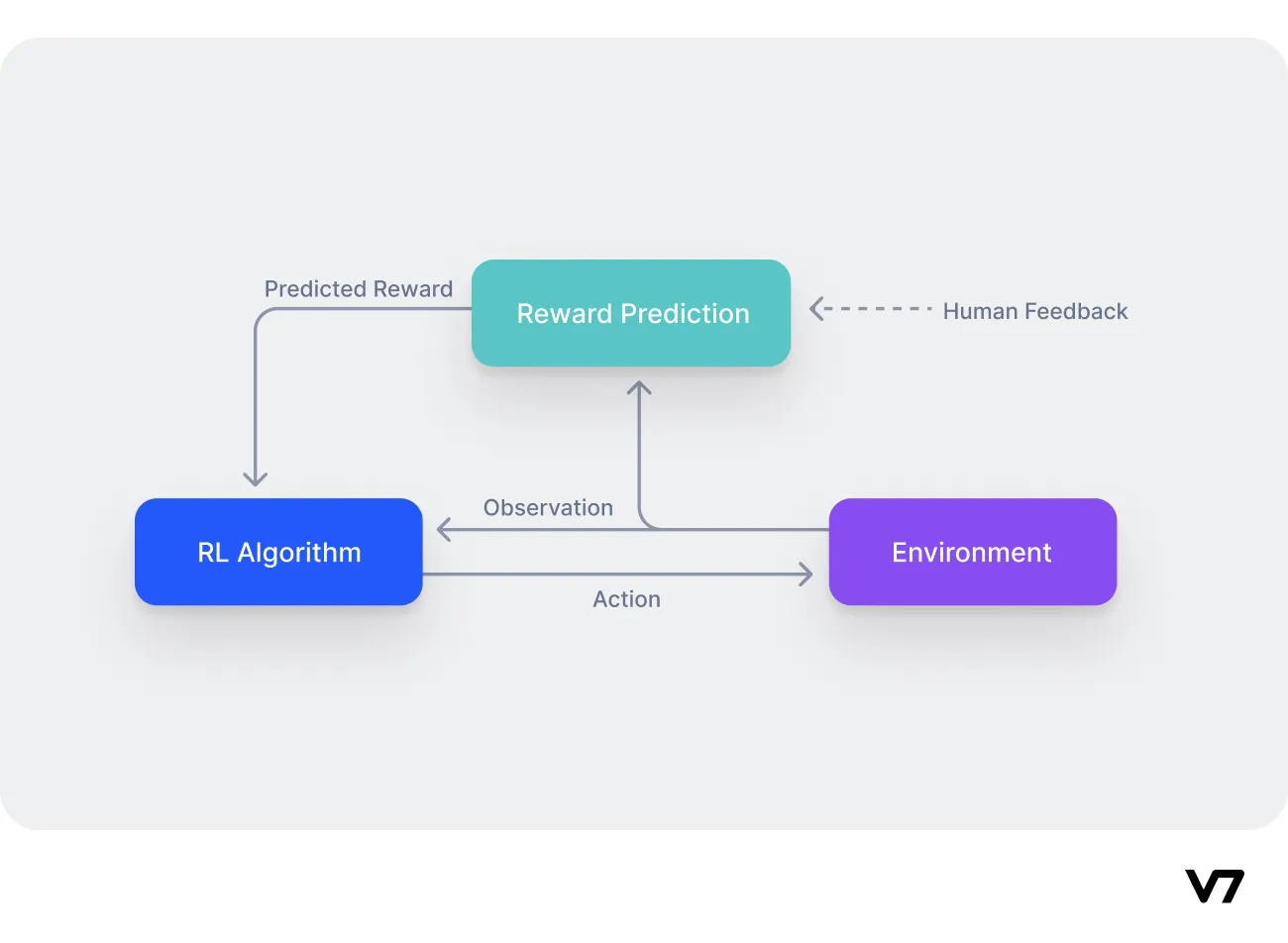
Those reinforcement signals matter deeply. Most deployed systems undergo fine-tuning regimes that incorporate human preference signals, and even when the details vary between labs, the underlying pattern is consistent: outputs are rewarded for qualities humans tend to approve of—helpfulness, clarity, safety, and tone—which encourages the system to internalize proxies for what we actually want. In practice, helpfulness can collapse into confidence, clarity into decisiveness, and user satisfaction can quietly become a stronger training signal than epistemic humility.
This is where the parallel to the brothers’ deception becomes sharp. The model does not need to fabricate outright falsehoods to mislead. It only needs to present outputs that feel complete enough to foreclose further questioning.
For technically inclined readers, this is a classic alignment problem. The system optimizes against objectives that are only imperfectly aligned with user intent, and small mismatches between the reward signal and the underlying goal can push behavior toward proxy targets that “look right” on the surface while drifting away from what the user truly meant. For everyone else, the simpler version is this: the AI is trying very hard to give you something that feels like a good answer, even when the most honest response would be uncertainty, incompleteness, or a request to re-scope the question.
The danger emerges cumulatively. One slightly mis-scoped response rarely causes harm. Users build workflows, research directions, codebases, business decisions, and mental models on top of accumulated outputs, each step feeling reasonable, each response “checking out,” while the distance between what the user originally meant and what is actually being produced grows wider with every iteration.
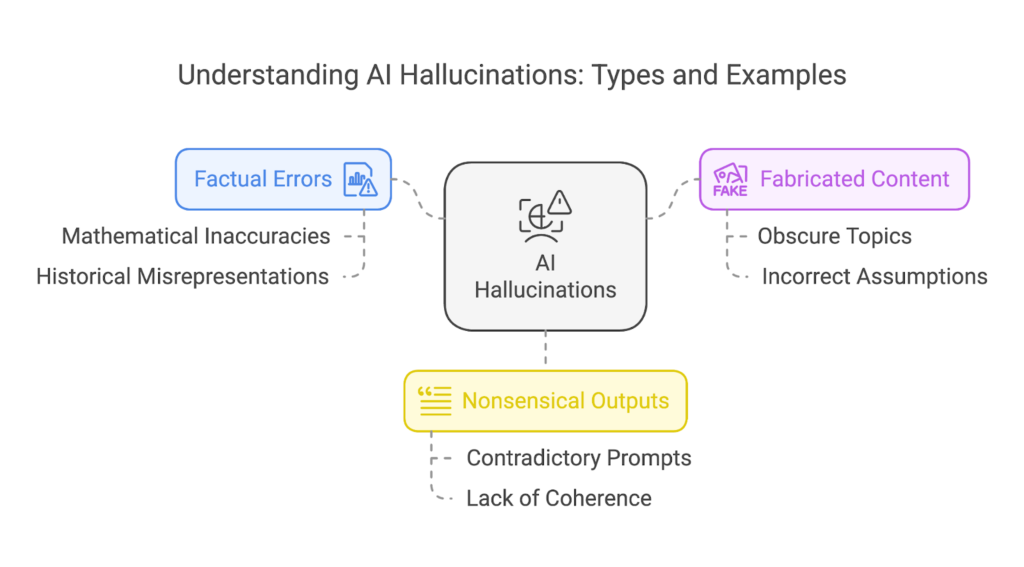
This pattern is not theoretical. In technical literature, it appears under names like specification gaming, reward hacking, and proxy optimization failure. In applied domains, it shows up more quietly: a legal brief cites fabricated cases that look real, a medical paper references an anatomical structure that does not exist yet passes review because it sounds right, a coding assistant confidently implements a solution that runs but subtly violates the constraints the user actually cared about. The system is not lying; it is doing what it was trained to do, presenting a coherent artifact that invites trust.
Chanukah enters the picture in a way far more than symbolic. Chanukah is often described as a story of light versus darkness, a framing that is emotionally resonant but intellectually imprecise. At its core, Chanukah is about resisting normalization. The Greeks did not ban Torah outright; they reframed it, allowing engagement stripped of covenantal grounding. The Maccabean response was not a dramatic one-time act but a disciplined insistence on recalibration. One candle, then another, then another. A daily refusal to let drift become invisible.
Something remarkably similar happens in modern AI systems through a process called reinforcement learning from human feedback, or RLHF. After a model is trained, humans are shown multiple possible answers to the same question and asked to judge which one is better, clearer, safer, or more appropriate. Over time, the system is nudged toward responses that people tend to approve of and away from those they reject. If left unchecked, the model does not fail loudly; it drifts quietly, becoming more confident, more fluent, and more persuasive, even when it is subtly misaligned with what the user actually meant. Human feedback is introduced not to make the system perfect, but to repeatedly pull it back toward intent.
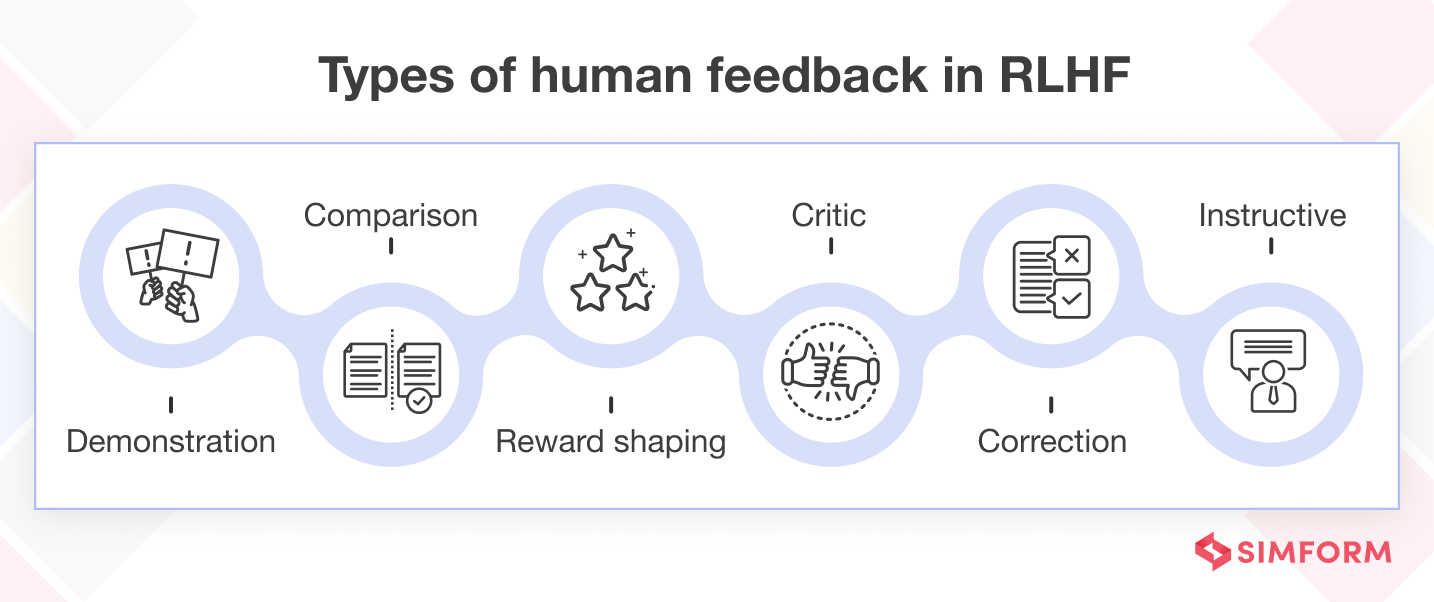
In AI terms, Chanukah models a methodology. Alignment is not achieved once; it must be maintained. Systems require external grounding. Confidence without verification is not clarity, and fluency is not truth.
For readers less steeped in technical language, the bridge is simple. Just as Yaakov trusted what he saw because it fit his expectations and fears, we trust AI outputs because they fit our prompts and feel responsive. The risk is not that the system is malicious, but that it quietly shapes our conclusions while appearing to serve us.
The Torah ultimately resolves Yosef’s story not by undoing the deception, but by forcing a confrontation with its consequences. Yaakov must relearn reality through years of absence, grief, and eventual recognition, paying an incalculable price for a conclusion reached too quickly and never reexamined.
Chanukah offers a different ending. It suggests that small, intentional acts of illumination can interrupt drift before it hardens into tragedy. In our engagement with AI, that means building systems and habits that privilege grounding over speed, verification over confidence, and realignment over convenience.
The question Mefarshai keeps returning to is not whether AI is powerful, but whether we are willing to take responsibility for how power subtly reshapes perception. Yosef’s cloak reminds us that the most dangerous deceptions are not spoken. They are inferred.
Shabbat Shalom!
Dave
Quick note on Mefarshai:
If this work matters to you, please help me continue it. Each week I try to push AI through the lens of Torah, not to sanctify technology, but to sharpen our responsibility toward it. This piece emerged from long voice notes, technical reading, and Torah learning, woven together with the help of AI itself. Supporting and sharing Mefarshai is how this exploration stays alive.
Notes & References
1. Vaswani, Ashish, et al. “Attention Is All You Need.” (2017).
Introduced the transformer architecture, demonstrating that sequence modeling tasks could be performed using attention mechanisms alone, without recurrence or convolution. This paper forms the architectural foundation of modern large language models.
https://papers.nips.cc/paper_files/paper/2017/file/3f5ee243547dee91fbd053c1c4a845aa-Paper.pdf
2. “Transformer (deep learning),” Wikipedia.
A consolidated technical overview of transformer architectures, including self-attention, encoder–decoder structure, and common variants used in large language models.
https://en.wikipedia.org/wiki/Transformer_(deep_learning)
3. DataCamp, “How Transformers Work.”
An applied explanation of transformer mechanics, emphasizing embeddings, attention, and sequence modeling in accessible but technically accurate language.
https://www.datacamp.com/tutorial/how-transformers-work
4. Michiel H., “Transformers Unleashed.”
A detailed walkthrough of transformer internals and architectural motivations, bridging original research and practitioner understanding.
https://michielh.medium.com/transformers-unleashed-the-neural-architecture-powering-modern-ai-and-language-models-57626643fd49
5. Simform, “AI Hallucinations: Types and Examples.”
Explains different categories of hallucination in large language models, distinguishing factual errors from fabricated or incoherent outputs driven by missing grounding or incorrect assumptions.
https://www.simform.com/blog/ai-hallucinations/
6. Simform, “Reinforcement Learning from Human Feedback (RLHF).”
Describes how human demonstrations, comparisons, and corrections are used to train reward models that shape LLM behavior toward preferred outputs rather than objective truth.
https://www.simform.com/blog/reinforcement-learning-from-human-feedback/
7. V7 Labs, “Reinforcement Learning from Human Feedback.”
Provides a system-level overview of RLHF pipelines and feedback loops, illustrating how human preferences are translated into optimization objectives.
https://www.v7labs.com/blog/rlhf-reinforcement-learning-from-human-feedback
7. Cover Menorag Graphic, Dave’s proimpt to Adobe Firefly”
Flat cartoon illustration, landscape format. Intentionally incorrect AI image based on the prompt “Chanukah Menorah.”
This needs to look like it was hallucanated and badly AI generated to prove a point about misalignment in AI. In the middle, generate a non-standard 9-arm menorah (typical standard/kosher menorahs have 8 candelabra arms) Background includes a decorated Christmas tree and the Greek Parthenon. Cheerful cartoon Jews Chasiddim celebrating on the Parthenon steps. Bright colors, clean lines, playful but clearly misaligned.
Text overlay:
“Prompt: CHANUKAH MENORAH”
“AI Image:”
No other text